If you absorb these basic ground rules into your parenting, you will notice the difference immediately. They are positive and life changing because they offer you a different way of thinking about a situation.
Let’s start with one that might be relevant for you at the moment.
THERE IS NO FAILURE, ONLY FEEDBACK
Yes, that’s right – you cannot fail as a parent! However badly you might feel you’re doing, look on your children’s feedback as useful information to understand what’s going on for them and what choices you have next.
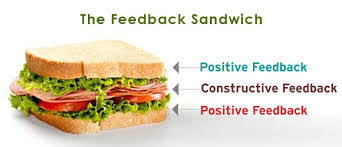
Equally, this means that when your child feels a failure, they haven’t failed either; they need to process your feedback or their teacher’s feedback and learn from it. We usually use the sandwich approach when giving feedback. We notice and comment on a positive aspect first, then mention what needs work, then fi nish on a positive note.
IF YOU SPOT IT, YOU’VE GOT IT
What we observe in others is usually a reflection of something in us. That’s how we recognize it. When you notice something in your child, ask yourself, how am I like that? Is your child modelling you? If it’s behaviour you want, that’s fi ne but if it isn’t, ask yourself, what could I do differently?
ONE WORD WORKS WONDERS
On the whole, children process short sentences better than long ones, so they will understand your meaning better if you make it short and sweet, for example: ‘Teeth,’ ‘Homework,’ ‘Door.’ This is particularly so for teenagers who are inclined to zone out as soon as you speak.
Note that children don’t understand sarcasm or facetious comments until they are in secondary school. Be clear and direct: tell them how it looks, sounds or feels to you.
THEY MEAN WELL
Tip
Behind every communication or behaviour there is a good intention – look for it. You may need to be imaginative, but it will be there. Whatever they say or do, they love you and want you to love them. At the very least, they want you to notice them. Look for the good intention in whatever they do. There is no bad behaviour, but there is attention-seeking behaviour.
show a child who means well but something has gone wrong
MIND THE GAP
Children have an amazing ability to press just the right buttons to get a reaction from us because this is what they need for survival. They need a response. Ideally they’d like a positive response but if that doesn’t look likely they go for the negative one because this still gets them the attention they’re craving.
Some parents use the ‘count to 10’ rule to control their temper, and others will leave the room and calm down before addressing a challenging situation. Both these solutions work, but when your child does something or says something you don’t like, there is an alternative.
Look up and imagine you are a fly on the wall. What would she make of it? This is called ‘disassociating’ and it enables you to separate your emotions from the situation so you can find the resource you need. Ask yourself what outcome you want and then express it without emotion.
On the basis that there is a good intention, NLP recommends looking for it and reappraising the event or situation in that light.
YOU HAVE THE RESOURCES TO DO WHATEVER YOU WANT TO DO
Do you remember your parents saying to you, ‘There is no such word as ‘can’t’? Well, there is some truth in it. You and your children have a huge bank of skills, but first you need to identify them. Seek out where you have the skill and apply it to the situation.
The skill might be one you use at work or it may belong to that time before you were a parent, but the skill is there somewhere. It may help to find someone you think is a good example of that skill and ask them how they do it. You have the skill to copy someone else and this is very useful in parenting because it enables us to acquire other parents’ skills.
IF SOMEONE ELSE CAN DO IT, YOU CAN TOO
All you have to do is identify what skill you need and who you believe to have it in abundance. Watch and learn from them and ask the right questions. You need to know their self-talk, their beliefs and values and break down all the elements of what they do so you can copy it. Then show your children how to do it!
IF YOU ‘TRY’, YOU WON’T SUCCEED
Just do it! As soon as you think you’ll ‘try’ to do something, you have assumed you won’t succeed. The same is true of asking your child to ‘Try to eat something’ or ‘Try to be good’. ‘Eat something’ and ‘Be good’ imply successful outcomes.
Insight
My son used to forget to bring home his homework diary and I used to tell him, ‘Try to remember your homework diary today, please.’ Then I realized how unproductive the word ‘try’ was. So instead I noticed when he did remember it and praised him by saying, ‘Well done for remembering your homework diary, you are so well organized.’ He beamed back. He doesn’t forget it nowadays because he has taken on the belief that he is well organized rather than the belief that he is forgetful.
THE MAP IS NOT THE TERRITORY
Children see their world quite differently from us; their priorities are different, their time scales, beliefs and the way they best communicate.
NLP talks about stepping into another person’s shoes. Get down to your child’s level, play on the floor alongside them and understand why only that piece of Lego can possibly go on that model they are making, or why this Barbie needs to have that shoe she’s looking for, or why they can’t possibly come now because they are busy playing.
mum playing with lego on the floor with a child
LOOK FOR THE GOOD INTENTION
Children do what they do because they get what they want by doing it – your attention, usually. How can you give them that result without the behaviour? They want and need attention and love, but their means of getting it isn’t always acceptable to us. What they want is our time and that isn’t always easy to give. We all have busy lives and lots of demands so how can we give our children that time they want?
One way of doing this is to take a moment to explain that if they do what you ask quickly, you will have more time to play with them, read them a story, or whatever you know they want to do with you. Children of all ages love to help, and getting them to do something with you such as laying the table, finding items in the shop or tidying away their toys, is a win-win, which as we all know in business and work situations is the key to harmonious negotiations. Simply bribing them with sweets or pocket money is a not a win-win.
Understanding children and teens by Judy Bartkowiak is a reader-supported publication. To receive new posts and support my work, consider becoming a free or paid subscriber.